Researched SMILE Elsewhere and Now Considering Korea? What Changes When You Travel
Having SMILE in Korea after researching it elsewhere changes the trip more than the medical steps. The exam fits into one visit in Seoul, early re-checks happen before you fly, records go home with you, and later follow-up is mostly local. How to plan each part.
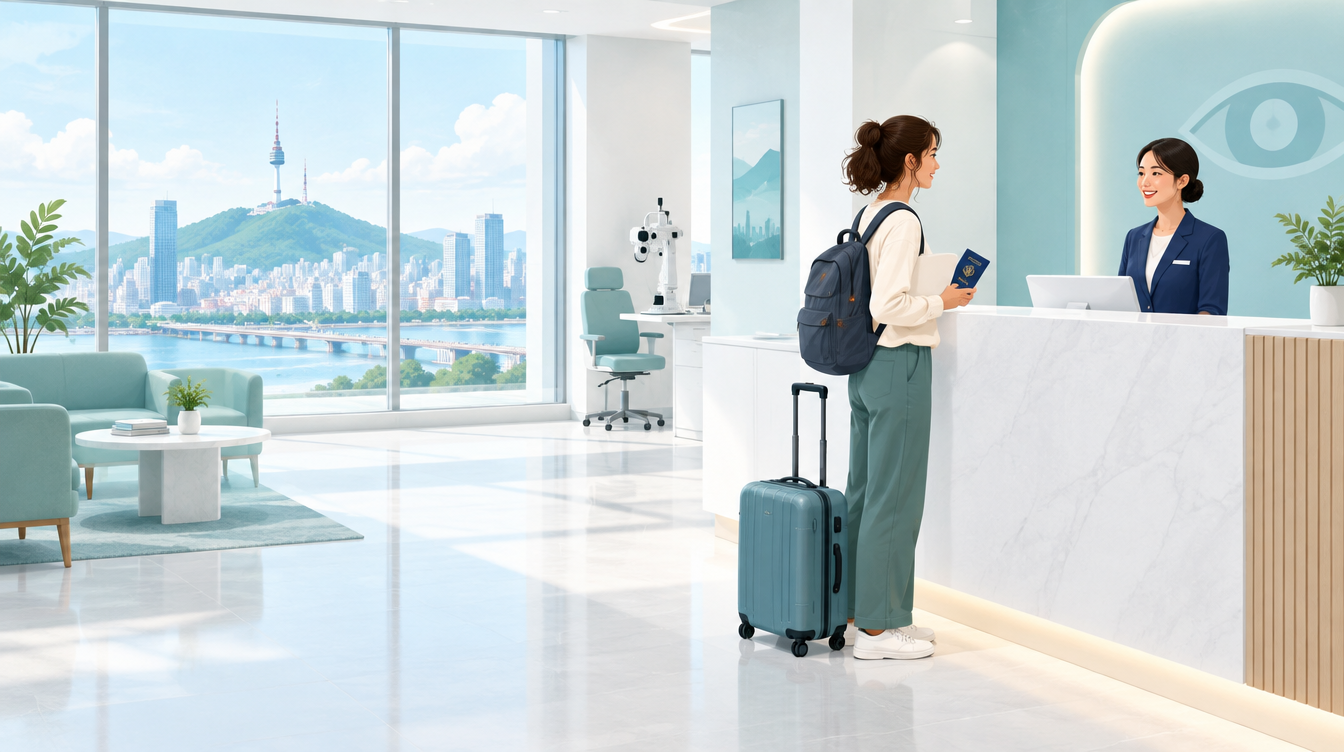
If you have already researched SMILE somewhere else and are now considering having it in Korea, what actually changes? The medical steps follow the same logic wherever you go: an examination decides whether laser correction suits your eyes and which option fits, the surgery is planned from those measurements, and healing is checked afterwards. What changes is the trip built around those steps. The examination has to fit into a short visit, the early re-checks have to happen before you fly, your records have to travel with you in a form another doctor can read, and most of the later follow-up happens at home. This article walks through those practical differences so you can plan for them. It does not compare countries, clinics or equipment, and it cannot tell you whether SMILE suits your eyes. Only an in-person examination can do that.
Many of the patients who write to us are flying in from Mongolia, so a few examples mention Ulaanbaatar. The same points apply wherever you are travelling from.
Same decision, different practical conditions
When surgery is near home, each step can be booked on its own day. You go in for the examination, think it over, come back for surgery, and return for checks over the following weeks. If the surgeon wants a measurement repeated, you come back another day.
When you travel, the same steps are packed into one stay, and some of them start before you leave. Flights and time off work are usually booked before anyone has measured your eyes in person. That is the main thing to plan around. The table below sets the two situations side by side.
| Surgery near home | Travelling to Korea for surgery | |
|---|---|---|
| Schedule | Examination, surgery and checks can be spread over separate days or weeks | Examination, surgery and the first checks fit into one stay, booked before your eyes are examined in person |
| Pre-operative exam | A repeat measurement can be done on another day if needed | Done in person in Seoul after you arrive. Any break from contact lenses has to be completed at home before you fly |
| Re-checks | Next-day and later checks are a short trip from home | Checks the surgeon requires before travel happen in Seoul. Later checks are agreed in advance, often with an eye doctor at home |
| Time away | Usually no overnight stay | Several days in Seoul, longer for some procedures, plus buffer days if possible |
| Records | Usually stay within one clinic | You leave with a written record that your eye doctor at home can read |
| If something changes later | You can return to the same clinic | You start with a message to the clinic, and urgent problems are seen locally first |
None of this makes one route better than the other. It means the trip needs more planning on paper before you leave.
The pre-operative exam: same purpose, one visit
The examination answers two questions: whether laser vision correction is suitable for your eyes at all, and if so, which option the surgeon would suggest. It usually includes a vision and prescription check, measurements of the thickness and shape of the cornea, eye pressure, an assessment of the tear film and a look at the pupil. At our clinic all examinations are done in person in Seoul. We do not diagnose remotely.
Before you travel, you can send your current prescription and any previous eye records for a preliminary review. That review helps you and the coordinator see what is worth discussing and what will need to be measured here. It does not confirm candidacy.
If you have already had a consultation somewhere else, bring the report. It gives the surgeon useful background, such as how your prescription has changed over time and what was found before. The surgery itself, though, is planned from measurements taken at the clinic that performs it and read by the surgeon who operates. That is not a judgement on the earlier exam. It is how surgical planning works everywhere.
Sometimes the suggestion you hear in Seoul differs from the one you heard before. Readings can shift with recent contact lens wear or a dry eye surface on the day, and different surgeons weigh the same findings in their own way. If that happens, ask the surgeon what drove the suggestion. A clear answer is more useful than trying to decide which opinion to trust.
Two practical points come from travelling:
- Contact lenses can temporarily change the shape of the cornea, so you will be asked to stop wearing them for a period before the exam. That break has to happen at home, before you fly. If lenses were worn too recently, the surgeon may want to repeat measurements later, which is hard to fit into a short trip. Ask the coordinator for the timing that applies to your lens type.
- The exam can show that laser correction is not suitable, or that a different option fits your eyes better. This is a normal outcome of a careful exam. Where you can, book travel that can be changed, and go in knowing that the answer may not be the one you expected.
Re-checks and how many days to stay
Near home, the checks after surgery are spread out: usually one soon after surgery, and more over the following weeks and months. You simply go back for each one.
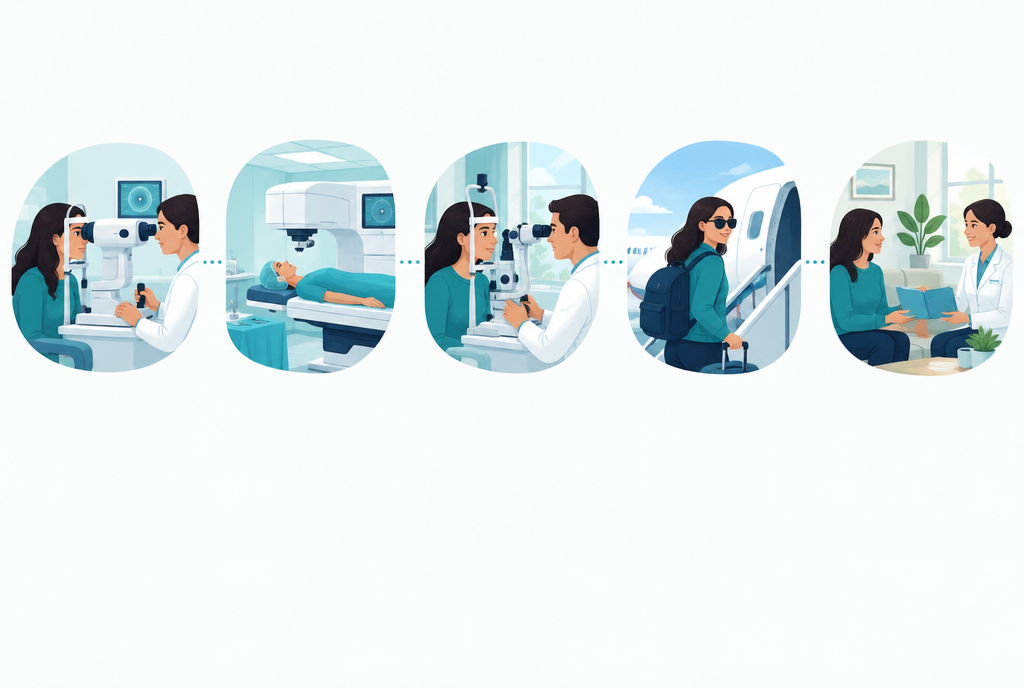
When you travel, the checks that the surgeon wants before you fly are done in Seoul. A common outline is a day for the examination, a day for surgery, at least one check the day after surgery, and only then a conversation about flying home. Some plans put the examination and surgery closer together, depending on what the examination shows and how the schedule falls. Your coordinator sets this with you. A detailed day-by-day example is in our guide to how many days to plan for the trip.
The procedure matters too. After small-incision procedures such as SMILE, travel is often discussed sooner. After surface laser treatment, the outer layer of the cornea has to grow back over several days under a protective contact lens, so travel is usually discussed later. Either way, the surgeon confirms readiness after reviewing healing. Counting days alone is not enough.
A few things make this part easier:
- Add buffer days if your work allows it, so a request for one more check does not clash with your flight.
- If possible, travel with someone, or arrange transport between the hotel and the clinic, because vision can be blurry at first.
- Before your last appointment in Seoul, agree which later checks are needed, where they will happen and roughly when.
Records: what to bring and what to take home
Records matter more when your care is split between two places. Bring as many of these as you have:
- Your glasses and current prescription, plus details of the contact lenses you wear
- Previous eye examination reports, including any from a clinic you consulted elsewhere
- A record of any previous eye treatment or surgery
- A list of your medicines and known allergies
Before you leave Seoul, make sure you have the following in writing, in a language your eye doctor at home can read:
- Which procedure was performed, on which eye or eyes, and on what date
- The main measurements from your examination
- Your eye drop instructions, with the schedule for each drop
- The dates of the checks expected after you return
- How to reach the clinic, and the name of your coordinator
If anything on this list is missing, ask for it before your final appointment ends. It is much easier to get a document while you are still in the building than to request it later from another country.
Follow-up after you fly home
Most of the recovery period happens after you have flown back. That is expected and planned for. What patients find hard is the uncertainty: something feels different, you are far away, and you are not sure whether it is worth mentioning.
If an eye doctor at home will do some of the later checks, give them your written record at the first visit. A doctor who knows what was done and when has better context for the examination than one working it out from the examination alone. If you would like the Seoul team to see the findings, ask before you leave how to send them.
Contact the clinic without waiting for a scheduled check if you notice any of these:
- Pain that increases rather than settles, or returns after it had stopped
- Vision that becomes less clear rather than steadily clearer
- Light sensitivity worse than you were told to expect
- Redness or discharge that appears or gets worse
- Any sudden change, especially after a knock to the eye
If something happens suddenly, especially after an injury, go to an eye clinic or hospital near you first, and then let us know what happened and what was found. Local care and contact with Seoul work together. Our article on what to do if something changes after you return home covers this in more detail. Our Mongolian-speaking and English-speaking coordinators can help you with these messages.
Conditions at home matter during recovery as well. The air in Ulaanbaatar is dry for much of the year, and heated rooms in winter make it drier. Use your drops exactly as prescribed, and follow the clinic's eye-protection instructions outdoors.
Questions to ask before you book flights
These questions help you turn the differences above into a plan you can actually follow:
- From my preliminary review, what can be said now, and what can only be measured in Seoul?
- How long should I stop wearing contact lenses before the exam, for my lens type?
- How many days should I plan to stay for the options that might suit me, and how many buffer days would you suggest?
- Which checks do I need to complete in Seoul before flying, and which can happen at home?
- What written records will I receive, and in which language?
- Who do I contact after I return, and how?
Gangnam Smile Eye Clinic (강남스마일안과) is a vision-correction and cataract clinic on Gangnam-daero, Seoul. This article was written from Gangnam Smile Eye Clinic's published information and the doctors' explanations. It is general information, not a diagnosis or a treatment recommendation for any individual. Whether SMILE or another option suits your eyes is determined after a detailed examination and a consultation with the surgeon, and results vary from person to person.
FAQ
What changes if I have SMILE in Korea instead of where I first researched it?
The medical logic stays the same: an examination decides whether laser correction suits your eyes, the surgery is planned from those measurements, and healing is checked afterwards. What changes are the practical conditions of travelling. The examination happens in person in Seoul after you arrive, the checks the surgeon wants before you fly are done in Seoul, you take a written record home for your eye doctor there, and most later follow-up happens at home. This article does not compare countries, clinics or equipment.
Can I use the exam results I already have from another clinic?
Bring them. They show how your prescription has changed over time and what was found before, which is useful background for the surgeon. The surgery itself is planned from measurements taken at the clinic that performs it, so you will be examined again in Seoul. Stop wearing contact lenses for the period you are advised before that exam, and remember that this break has to happen at home, before you fly.
How many days should I stay in Seoul?
A common outline is a day for the examination, a day for surgery and at least one check the day after surgery, and only then a conversation about flying home. Surface laser treatment usually needs a longer stay than small-incision procedures such as SMILE, because the outer layer of the cornea has to grow back. The surgeon confirms when you are ready to travel after reviewing healing, so add buffer days if you can.
Who checks my eyes after I return home?
Agree this before you leave Seoul: which later checks are needed, where they will happen and roughly when. If an eye doctor at home does them, bring the written record of what was done and when. Contact the clinic if pain increases, vision becomes less clear or anything changes suddenly. For anything urgent, go to a local eye clinic first and let us know afterwards.