What Is the Difference Between SMILE Pro and SMILE LASIK?
Both are laser procedures for myopia and astigmatism, but one works through a small incision and the other through a corneal flap. Here is what that difference means for your examination, your recover…

What is the difference between SMILE Pro and SMILE LASIK? The short answer: SMILE Pro corrects vision by creating a small lens-shaped piece of tissue, called a lenticule, inside the cornea with a femtosecond laser and removing it through an incision of a few millimetres, without lifting a flap. SMILE LASIK, as the term is used at our clinic, is flap-based laser correction: a thin flap is lifted, an excimer laser reshapes the cornea underneath, and the flap is laid back in place. Both treat myopia and astigmatism. Which one suits your eyes is decided by the examination, not by preference alone.
Gangnam Smile Eye Clinic (강남스마일안과) is a vision-correction and cataract clinic on Gangnam-daero, Seoul. Patients from Mongolia ask us this question more than almost any other, so this article walks through the difference in plain terms.
How each procedure reshapes the cornea
Both procedures change the curve of the cornea, the clear front window of the eye, so that light focuses on the retina. The difference is how the laser reaches the tissue.
In SMILE Pro, the femtosecond laser works inside the cornea while the surface stays closed. It outlines a thin lenticule and a small opening at the edge. The surgeon draws the lenticule out through that opening. The laser step itself takes seconds, and the platform used for SMILE Pro adds automatic centring, which helps the system stay aligned with your eye during that step.
In SMILE LASIK, the surgeon first creates a flap in the outer layers of the cornea and folds it aside. An excimer laser then removes tissue from the exposed surface in the pattern calculated from your prescription. The flap is returned to its position and settles without stitches.
Neither is simply the newer version of the other in a way that makes one automatically right for you. They are two routes to a similar goal, and each has situations where it is the better fit.
What the difference means in the first days
Because SMILE Pro leaves most of the corneal surface untouched, there is no flap to protect. Many patients describe the early period as mainly dryness and fluctuating clarity while the eye settles.
With SMILE LASIK, the flap needs care in the early healing period. That mostly means not rubbing the eyes, wearing the protective shields you are given for sleep, and being careful with water and dust until the clinic says otherwise. Visual recovery with a flap is often quick, which is one reason the method has such a long track record.
For someone flying back to Mongolia, the practical question is how each recovery fits your travel dates. The clinic will tell you when it is reasonable to fly after your specific procedure. Do not book a return flight for the day after surgery and hope it works out.
What the examination looks at
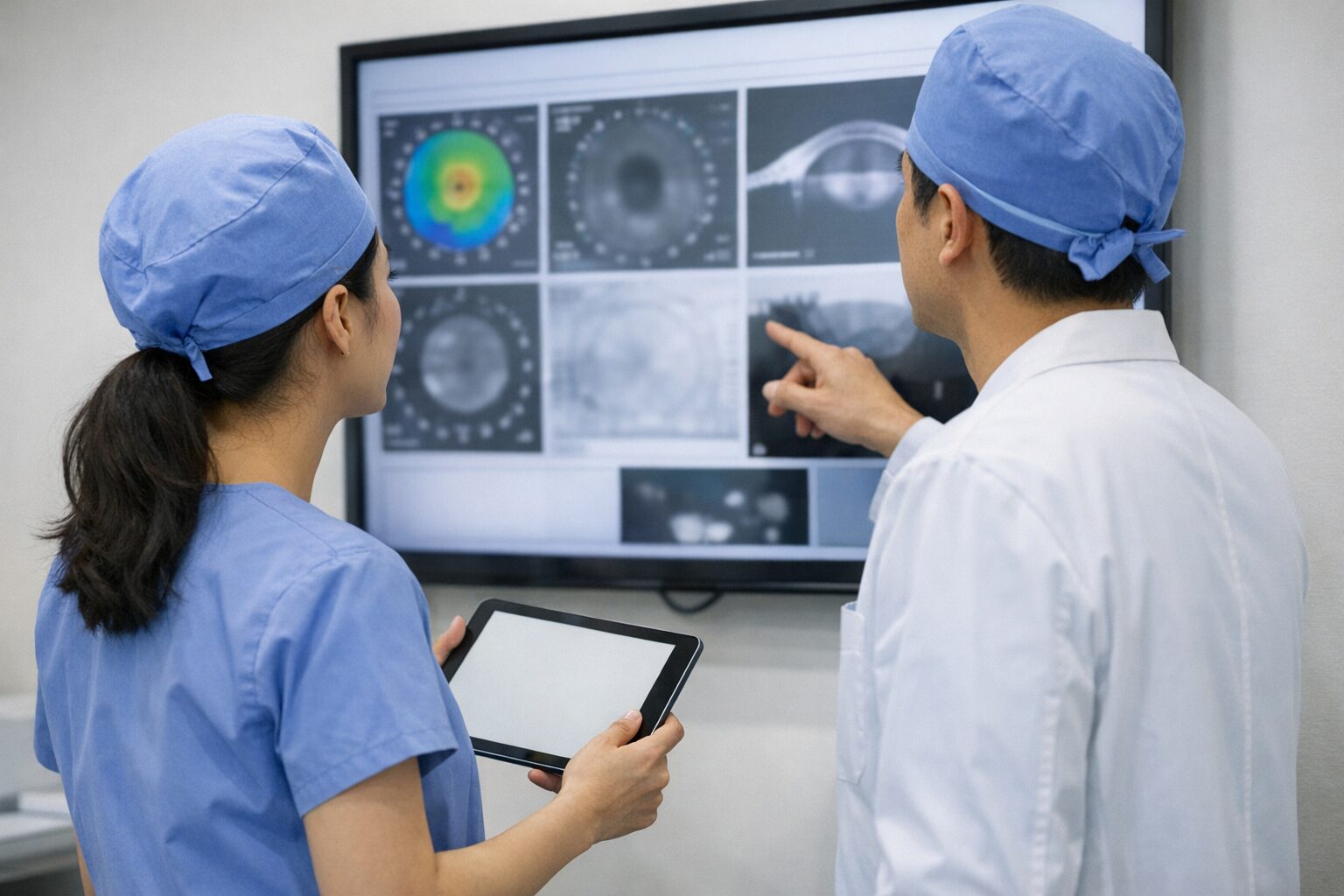
The decision between the two comes from measurements, and most of them can only be taken in the clinic.
- Corneal thickness, mapped across the surface rather than measured at one point
- Corneal shape, and whether the pattern suggests the tissue would respond well to laser treatment
- Your prescription and how stable it has been over recent years
- Tear film quality, since dry eye affects comfort after either procedure
- Pupil size in dim light, which matters for night driving
A thinner cornea, a higher prescription or a tendency to dry eye can tip the decision one way. Sometimes the answer is neither, and an implantable lens is discussed instead. That is not a failure of planning. It is the examination doing its job.
Questions worth asking in the consultation
Ask which procedure the doctor recommends for each eye and why, since the two eyes do not always get the same answer. Ask what the early recovery looks like for that procedure and what you will need to avoid. Ask when you can fly and when the first check-up after returning home should happen.
If you send your current prescription and any older records through our consultation channels before booking travel, our Mongolian-speaking coordinator can tell you what can be assessed from a distance and what needs the examination in Seoul.
Suitability is determined after a detailed examination and a consultation with the doctor. Results vary from person to person.
FAQ
Is SMILE Pro just a newer version of SMILE LASIK?
Not in the way that matters for your eyes. SMILE Pro removes a small lenticule through an incision of a few millimetres without a flap. SMILE LASIK lifts a thin corneal flap and reshapes the tissue underneath with an excimer laser. They are different routes to a similar goal, and the examination decides which fits each eye.
Does SMILE Pro treat astigmatism as well as myopia?
Yes, both SMILE Pro and SMILE LASIK treat myopia and astigmatism. Whether your prescription falls within the range each method handles is confirmed by the measurements taken during the examination.
Which one has the faster recovery?
Many patients recover quickly with either. The difference is in what needs care: with SMILE LASIK the flap must be protected early on, while with SMILE Pro the early period is mostly about dryness. Your doctor tells you when it is reasonable to fly after your specific procedure.
Can I choose which procedure I want?
You can tell the doctor your preference, and it is taken into account. The measurements of corneal thickness, corneal shape, prescription stability, tear film and pupil size decide what is possible. Sometimes the answer is neither, and an implantable lens is discussed instead.