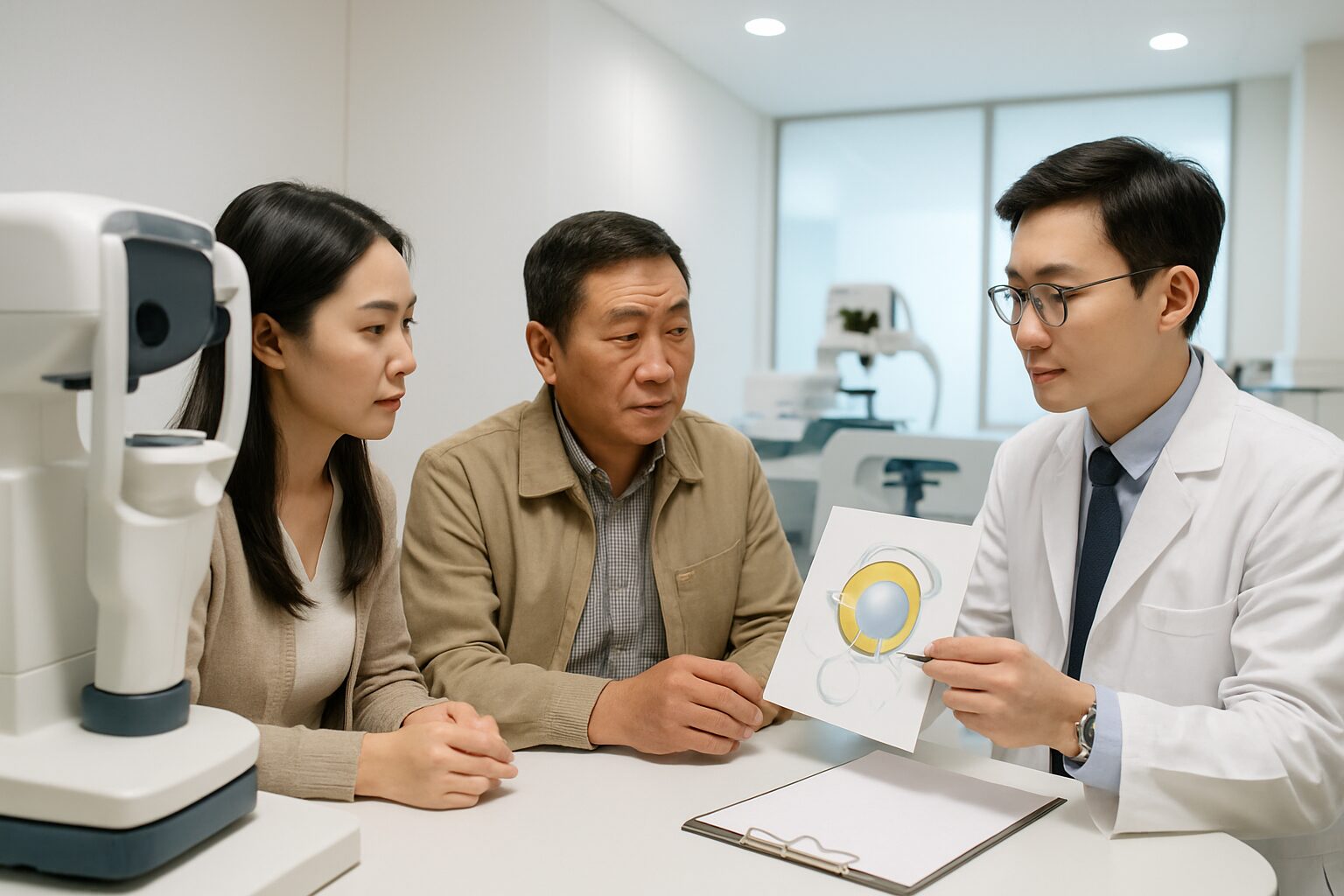
Coming to Seoul With Family for Eye Surgery
Many patients travel with a spouse, a parent or a child rather than alone. That changes the schedule in ways worth planning for before you book.

Most people do not come alone
Enquiries usually describe one patient. In practice, a good number of people arrive with someone: a spouse, a parent, an adult child, sometimes several family members at once.
That is entirely reasonable, and often it makes the trip easier. It also changes the shape of the schedule, and the differences are easier to handle when they are planned rather than discovered.
What a companion actually helps with
The hours right after surgery are when it matters most. Vision is not at its usual state, light feels harsher than normal, and getting back to where you are staying is simpler with someone alongside.
They also help with what gets remembered. A great deal of information is given on the day, and having a second person who heard the same instructions is genuinely useful when questions come up later.
And they help with the ordinary things: meals, medication timing, keeping the eye drop schedule on track when the day has been long.
Where a companion cannot substitute
Interpreting is the one to be careful about. Everyday conversation and carrying medical terminology across two languages are different skills.
Where accuracy matters, procedure names, side effects, the wording of a consent form, putting a family member in that position moves the weight onto them. We arrange Mongolian-language support for that reason rather than assuming someone in the group will manage it.
A family member who speaks Korean well is welcome to be present. The formal explanation still goes through our coordination team, which protects both of you.
When more than one person is having treatment
This comes up often, particularly with couples or with a parent and adult child travelling together.
It is usually possible, but the schedule is not simply doubled. Both people need examinations before either surgery is planned, and the results may point to different procedures with different recovery patterns.
The common arrangement is to stagger them, so that one person is past the early recovery stage before the other begins. That way there is always someone able to help, rather than two people recovering at the same time in an unfamiliar city.
Whether staggering is possible within your stay depends on the days you have. Tell us at the enquiry stage how many people are having treatment and how long you can stay, and we will set out what fits.
Travelling with children
If children are coming as companions rather than patients, plan for the surgery day specifically. That day is not one where a patient can supervise, and the clinic is not a suitable place for a child to wait through an extended appointment.
Working out in advance who is with the children during those hours prevents a difficult morning. It is a small piece of planning that is easy to overlook until the day arrives.
Accommodation and moving around
We can advise on areas that are convenient for the clinic and easy to move around after surgery. We do not book accommodation, and we are not a travel agency, but knowing which areas make the days after surgery easier is useful information to have before you reserve anything.
For a group, the practical point is proximity rather than anything else. A shorter journey back after surgery matters more than most other considerations on that particular day.
What to tell us when you enquire
How many people are travelling and who among them is having treatment.
The days you can stay, including your arrival and departure flights.
Whether anyone in the group speaks Korean, and whether anyone has particular needs during the visit.
With that, we can set out a schedule that accounts for the group rather than one that assumes a single patient and leaves the rest to be worked out on arrival.
Before you book
Send your prescription history and your travel dates. Consultation is available in Mongolian, and our coordination team handles the records side before you arrive. Final assessment and planning are confirmed after examination here.
FAQ
Can my family member interpret for me?
For everyday conversation, yes. For procedure names, side effects and consent wording, accuracy matters and that weight should not sit on a family member. We arrange Mongolian-language support, and your family is welcome to be present alongside it.
Can two of us have surgery on the same trip?
Usually yes, but it is not simply doubled. Both need examinations first, and the results may point to different procedures. Staggering them means one person is past early recovery before the other begins. Tell us your dates and we will set out what fits.
Do you book accommodation for us?
We advise on areas that are convenient for the clinic and easy to move around after surgery, but we do not make bookings and we are not a travel agency. Knowing which areas suit the days after surgery is useful before you reserve anything.
What should I plan for on the surgery day if children are with us?
Arrange in advance who is with the children during those hours. The patient cannot supervise that day, and an extended appointment is not a suitable wait for a child. It is easy to overlook until the morning it matters.