When Can You Drive After Vision Correction? Day One to Night Driving
Not on surgery day, whichever method you have. After that, your follow-up check decides, and night driving usually comes later than daytime driving. How it typically differs after LASIK, SMILE-type surgery, surface laser and ICL, and how to plan the car rides in Seoul and the drives back home in Mongolia.

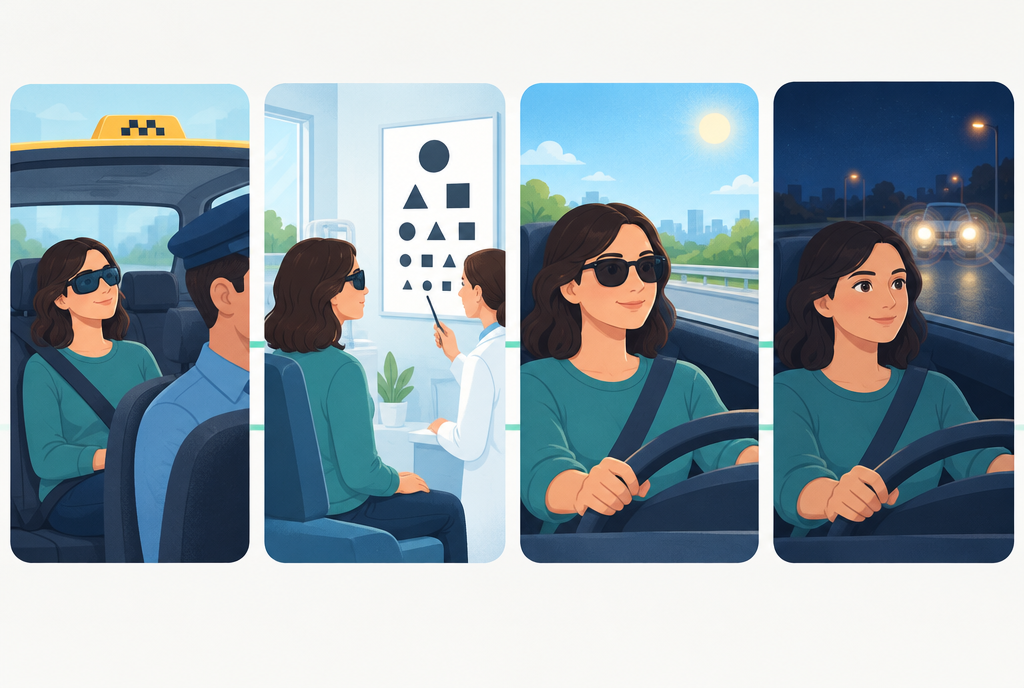
When can you drive after vision correction? Not on the day of surgery, whichever method you have. After that, the answer comes from your follow-up check rather than from a fixed number of days. After LASIK, vision often recovers quickly enough for driving to be discussed at the first check, which usually takes place within a day or two. After lenticule-based small-incision surgery such as SMILE, visual recovery can be slightly slower. After surface laser treatment (LASEK or PRK), it may take a week or longer before vision reaches the standard needed to drive. After an ICL lens implant, you cannot drive to the check the next day, and your surgeon tells you when it is safe. Night driving is a separate question, because glare from oncoming headlights is common at first. These are typical patterns from published medical guidance, not a schedule for your eyes. The surgeon who examines you makes the decision.
This article covers the practical side: getting back to your hotel on surgery day, getting to the check the next morning in Seoul, what that check looks at, night driving in the first weeks, and driving once you are home in Mongolia, where winter darkness comes early and the drives between towns are long.
Surgery day: plan for someone else to drive
Right after surgery your vision is blurry, and your eyes may water and feel sensitive to light. Some clinics also give medicine before the procedure to help you relax, and that medicine affects driving on its own, so ask in advance whether you will receive any. Either way, guidance from the US Food and Drug Administration, the American Academy of Ophthalmology and the UK's NHS agrees on this point: do not drive home on the day of surgery.
For patients visiting Seoul this is usually easy, because few visitors drive here anyway. The real question is how you get from the clinic back to where you are staying. The hotels we suggest are close to the clinic, in areas such as Sinsa, Apgujeong and Yeoksam, so the trip is short. It still helps to decide it before the day:
- Come with a companion if you can. Someone beside you makes the trip back, the first evening and the eye drop schedule much easier.
- If you are travelling alone, settle in advance how you will get back, for example by taxi with your hotel address written in Korean. Your coordinator can share the route from the clinic to your hotel.
- Bring sunglasses. Bright light can be uncomfortable for the first hours, and the clinic also provides protective eyewear.
- On the way back, sit in the back seat, keep your eyes closed if you like, and turn air vents away from your face.
Our day-by-day trip schedule from Mongolia shows where surgery day and the next-day check fit into a typical stay.
The next morning: go to your check as a passenger
The FDA advises arranging transport for the surgery and for the first follow-up visit, which it places within 24 to 48 hours after LASIK. For ICL lens implants, it says the check is the day after surgery and that you will be unable to drive to it.
Even if your vision feels clear when you wake up, travel to the next-day check as a passenger. That check is where the surgeon decides whether you are ready to drive. Driving yourself there would put the decision before the examination that is meant to make it.
Leave a little extra time for the trip, since Gangnam traffic can be slow in the morning, and bring your drops and sunglasses with you.
Why the check decides, not the calendar
Two people who have the same procedure on the same morning can heal at different speeds. Our own recovery guidance puts it this way: do not decide by counting days alone, have your vision and glare symptoms assessed at follow-up, and confirm readiness with your surgeon. It also notes that advice for daytime and night driving may differ.
In general terms, the surgeon looks at how clearly you see at distance with each eye and with both eyes together, how the surface of the cornea is healing, whether dryness is blurring your vision between blinks, and how strong any glare or halos are. Driving asks more of the eyes than reading a chart in a bright room. The FDA notes that even with good vision on the chart, some patients do not see as well in low-contrast conditions such as night or fog. That is why daytime driving and night driving are often cleared at different times.
Questions worth asking at the check:
- Am I cleared to drive in daylight?
- What about driving at night, or in rain or fog?
- Should I wear glasses for driving for the time being?
- Is there anything about my eyes today that would change this answer?
Ask for the answer to be included in your written aftercare notes. You will want it later if an eye doctor at home takes over your follow-up.
Typical timing by method
The table summarises what published medical guidance describes as typical for each method. It does not set dates for you. In every case the final decision is made by the surgeon after examining your eyes.
| Method | When driving is usually discussed (after the doctor's check) | Night-driving notes |
|---|---|---|
| LASIK | Vision often recovers quickly, and many people go back to work the day after surgery. Driving is usually raised at the first check, within 24 to 48 hours | Glare from oncoming headlights is common at first and usually improves within a few months |
| Lenticule-based small-incision surgery (such as SMILE) | Visual recovery may be slightly slower than after LASIK, so clearance can come at a later early check | The same early pattern of glare and halos around lights, mostly noticed at night |
| Surface laser (LASEK, PRK) | The outer layer of the cornea grows back over about a week. It may take a week or longer before vision reaches the driving standard | Vision keeps sharpening for around three months as the surface smooths, so ask about night driving separately |
| ICL lens implant | You cannot drive to the check the day after surgery. Vision is often hazy for several days and usually stabilises over about two to four weeks. The surgeon tells you when it is safe | Glare, starbursts or halos around lights may occur and usually ease over the following weeks |
The differences between methods mostly concern the first days. The rule that the check decides is the same for all four.
Night driving in the first weeks
The Royal College of Ophthalmologists describes increased glare from oncoming car headlights as a common symptom after laser vision correction, and says night driving may be difficult at first. These effects are usually mild and improve within a few months. Lasting problems are unusual but can still happen. The NHS gives the practical version: do not drive at night until your eyes have recovered. Why lights look this way while the eye heals is explained in our article on halos and light sensitivity in the first weeks, so here we stay with the driving.
Once you are cleared, a gradual start makes sense:
- Make your first drives in daylight, on roads you know, at a quiet time of day.
- Keep the windscreen clean on the inside as well as the outside. A smeared screen spreads headlight glare.
- Dryness can blur vision between blinks. If your surgeon has prescribed lubricating drops, ask whether to use them before a longer drive.
- Many people find their eyes drier and more tired by the evening in the early weeks. Avoid long drives after dark at the end of a tiring day.
- If you are told to use glasses for night driving for a while, keep them in the car.
If night glare still bothers you at a later follow-up, say so plainly. The surgeon can only assess what you report.
Driving after you return to Mongolia
Our stay guide plans the flight home for after the post-op check, so you may land cleared for daytime driving but not yet for night driving. Conditions at home make that difference matter more than it does in Seoul:
- In winter it gets dark early in the evening and stays dark well into the morning, so commutes and school runs often happen in the dark. For the first weeks, plan errands for daylight hours, or let someone else drive at night until you are cleared.
- Drives between towns are long, often on open roads with few street lights and headlights coming the other way. Leave long night drives until your surgeon or your eye doctor at home has confirmed you are ready.
- Snow and low winter sun can be very bright. Wear sunglasses during the day.
- Car heaters dry the air. Point the vents away from your face, and keep your drops within reach.
If you drive for a living, raise this at your consultation before you book flights. Time away from driving affects work plans, and your surgeon can tell you what to expect for the options that might suit you. Rules for professional licences differ by country, so check them with the licensing authority that issued yours.
If an eye doctor in Mongolia will do your later checks, bring your written record from Seoul and ask them about driving as well.
If your vision changes after you start driving again
Stop driving when it is safe to do so and contact the clinic if you notice any of these:
- Vision that becomes less clear rather than steadily clearer
- Glare or light sensitivity that gets worse instead of easing
- Pain that increases, or returns after it had settled
- Redness or discharge that appears or gets worse
- Any sudden change, especially after a knock to the eye
Mild blurring that clears when you blink is often linked to dryness, which is common while the tear film settles. If you are not sure, do not drive until you have asked. For anything sudden, especially after an injury, go to an eye clinic or hospital near you first, then let us know what happened. Our English-speaking and Mongolian-speaking coordinators can help you write that message.
Gangnam Smile Eye Clinic (강남스마일안과) is a vision-correction and cataract clinic on Gangnam-daero, Seoul. This article was written from Gangnam Smile Eye Clinic's published information and the doctors' explanations. It is general information, not a diagnosis or a treatment recommendation for any individual. When you can drive, by day or at night, is decided by your surgeon after examining your eyes, and recovery varies from person to person.
FAQ
Can I drive myself home after vision correction surgery?
No. Whichever method you have, plan for someone else to drive. Vision is blurry right after surgery, and some clinics give medicine beforehand to help you relax, which also affects driving. In Seoul this usually means a short taxi ride or a lift with a companion from the clinic to a hotel nearby. Settle how you will get back before the day of surgery.
If I see well the next morning, can I drive to my follow-up check?
Go as a passenger. The next-day check is where your surgeon decides whether you are ready to drive, so driving to it would make the decision before the examination. Guidance from the US FDA advises arranging transport for the surgery and the first follow-up visit.
Will I need glasses for driving afterwards, and does my licence change?
Many people drive without glasses after vision correction, but some still need them for certain tasks, such as driving at night. Your surgeon or eye doctor can tell you whether that applies to you. Licence rules differ from country to country. If your licence currently says you must wear corrective lenses to drive, ask the authority that issued it whether and how that changes. We cannot advise on the licence rules of a particular country.
How long does glare from headlights last after surgery?
Glare and halos around lights are common in the early period and are usually most noticeable at night. For laser vision correction, the Royal College of Ophthalmologists says these effects are usually mild and improve within a few months, although lasting problems can occasionally occur. Do not drive at night until your surgeon has confirmed you are ready, and mention any glare that still bothers you at your later checks.