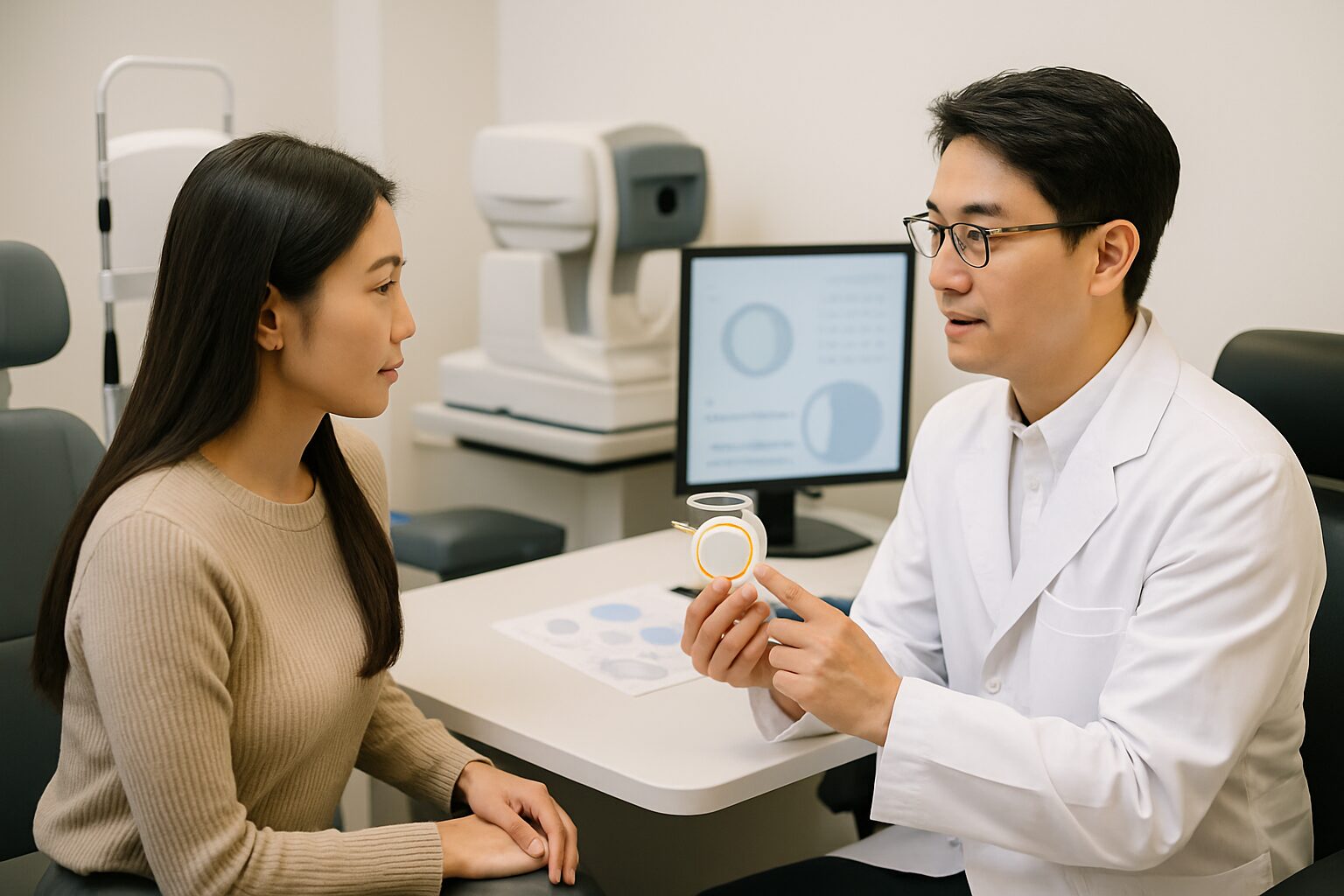
Monovision and Presbyopia Correction Consultation in Korea
Understanding your near-vision options before you choose a procedure in Seoul…

What Presbyopia Actually Is
Presbyopia is not a disease and it is not the same as being nearsighted or farsighted. It is a loss of the focusing power your eye uses to shift from far to near. Even people who never needed glasses before will notice it, usually starting around age 42 to 48. Because it is progressive, a correction that feels perfect at 48 may need adjustment at 58.
Understanding this matters because no single procedure freezes your eyes in time. A good consultation explains how your chosen option will behave as you continue to age, and whether a future enhancement or lens upgrade may be discussed later. Honest planning beats a promise of permanent perfection.
The Main Correction Options
There are three broad families of presbyopia correction, and a thorough consultation reviews all of them rather than pushing one.
Monovision laser correction adjusts one eye for distance and the other for near. The brain learns to favor whichever eye suits the task. It uses familiar LASIK or SMILE-type technology and avoids intraocular surgery, but it requires neural adaptation and is not ideal for everyone.
Multifocal or extended-depth lens exchange replaces the natural lens with an artificial lens that provides multiple focal points. It is often suitable for patients already developing cataracts or those over a certain age where the natural lens offers little remaining benefit.
Corneal inlays and other approaches exist but are used selectively. The point of consultation is matching the method to your anatomy and lifestyle, not the other way around.
Comparing Monovision and Lens-Based Options
| Factor | Monovision Laser | Multifocal Lens Exchange |
|---|---|---|
| Best typical age | Mid-40s to 50s | Late 50s and older, or with cataract |
| Surgery type | Corneal laser, no incision into eye | Intraocular lens replacement |
| Adaptation needed | Yes, brain learns to balance eyes | Some, mostly to halos at night |
| Night-driving glare | Lower | Can be higher early on |
| Future cataract | Still possible later | Addressed at the same time |
| Reversibility | Limited, but adjustable | Permanent lens change |
No column is universally better. The right choice depends on your eyes and expectations, which is exactly what the consultation is designed to clarify.
What a Thorough Consultation Includes
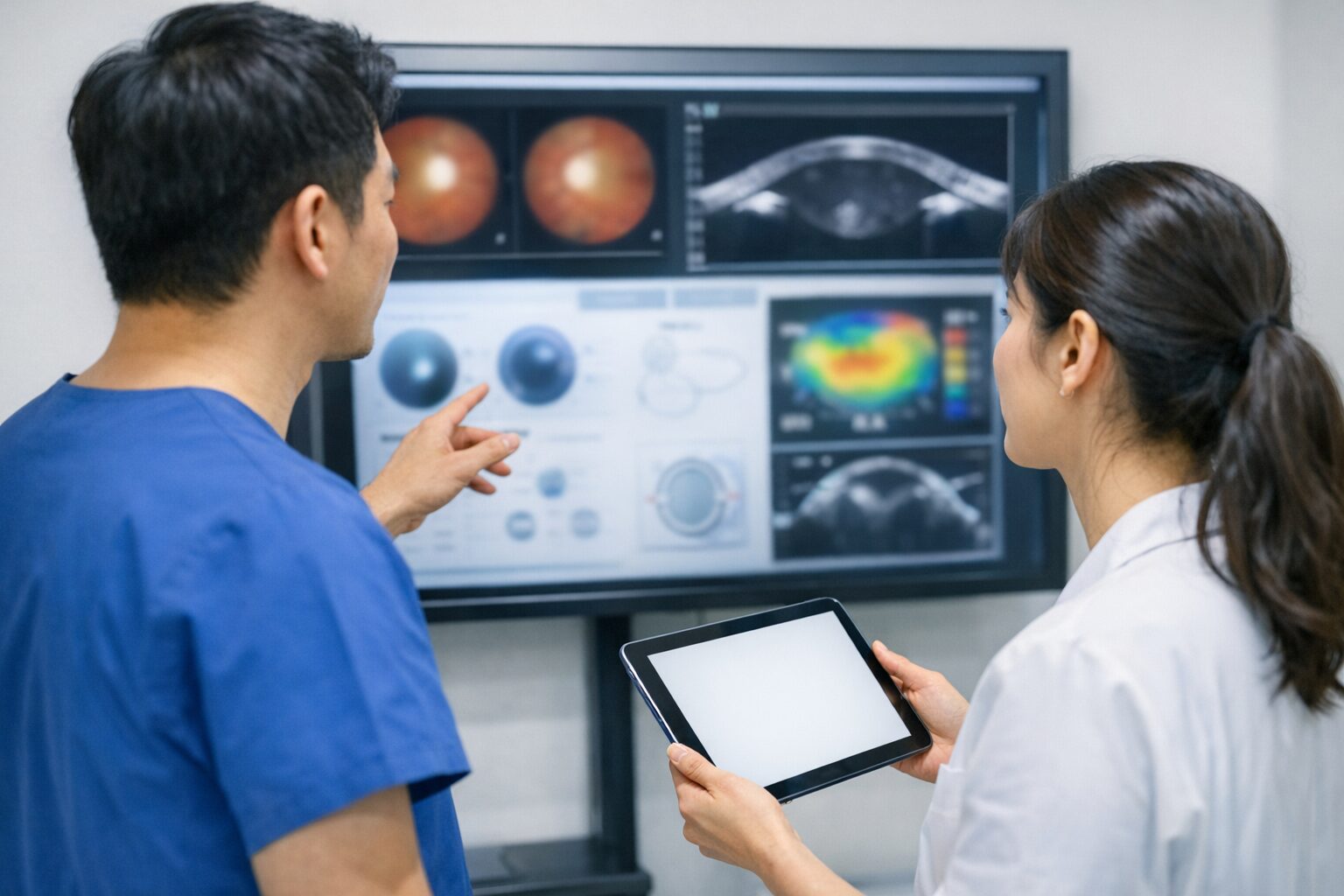
A complete presbyopia consultation goes far beyond a quick eye-chart test. Expect detailed measurements of your cornea, pupil size, tear film quality, and the health of your retina and lens. Surgeons also ask about your work, hobbies, screen time, and night driving needs.
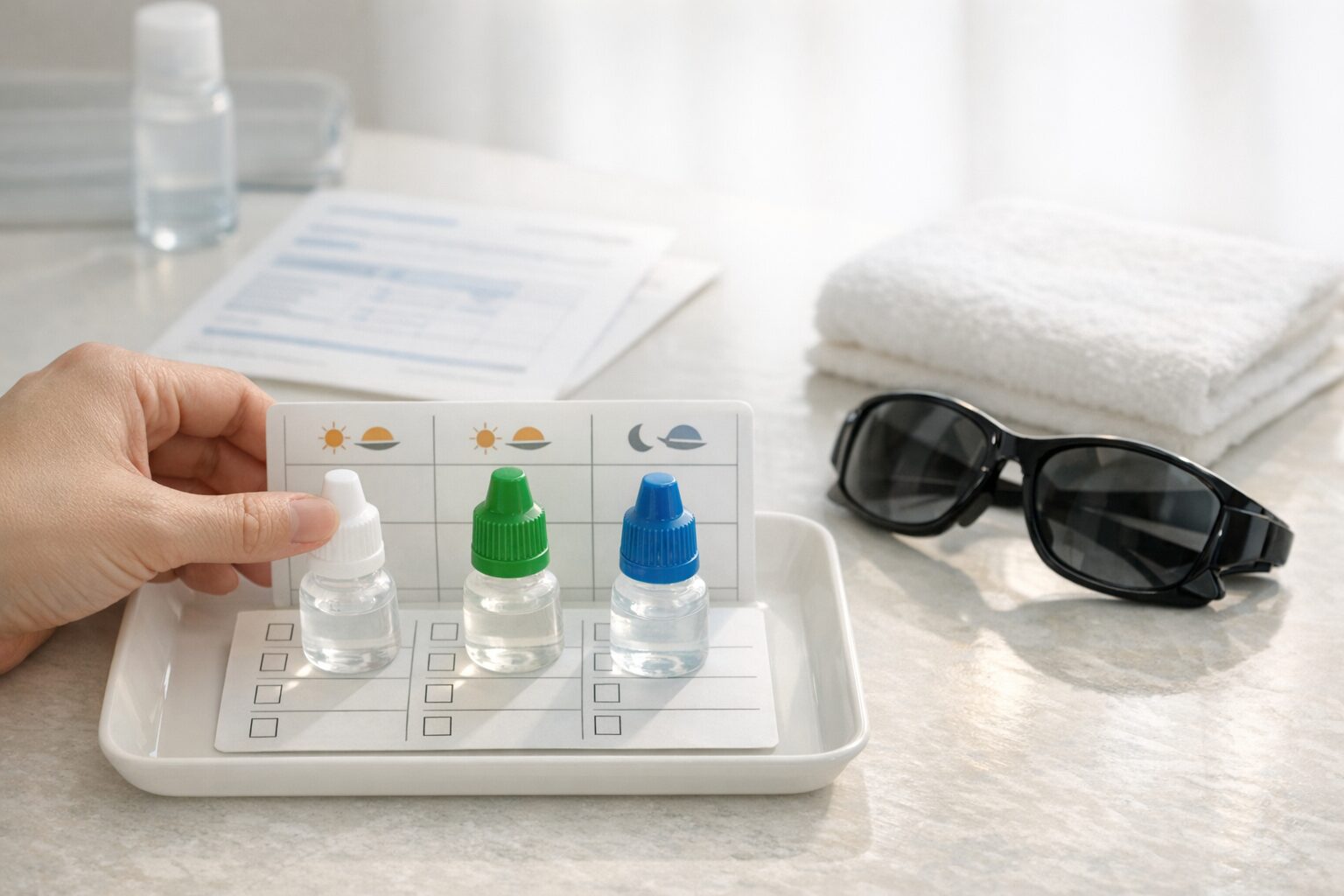
One practical and revealing step is a monovision trial with contact lenses or a simulation, so you can feel how splitting near and distance vision actually works before committing. Many patients find this trial changes their preference entirely. Bring your current glasses and a list of the visual tasks that frustrate you most.
You should leave the consultation understanding your candidacy, your realistic outcome, the likely need for glasses in specific situations, and the cost. If any of those are unclear, ask again.
Safety, Candidacy, and Honest Limits
Not everyone is a candidate, and a responsible clinic will say so. Monovision adaptation can be difficult for people who depend on sharp depth perception, such as some drivers or those with demanding fine-detail jobs. Severe dry eye, certain retinal conditions, thin corneas, or unstable prescriptions may rule out specific procedures.
All surgery carries risk. Possible issues include glare, halos, reduced contrast in dim light, residual need for glasses in some tasks, and rarely the need for further treatment. No procedure can be guaranteed to be risk-free or to eliminate glasses in every situation.
A good outcome is realistic vision freedom for your daily life, not a promise of flawless eyes at every distance forever.
The aim of an ethical consultation is to confirm that benefits outweigh risks for your specific eyes, and to decline when they do not.
Planning Your Visit to Seoul
Smile Eye Clinic in Gangnam,Seoul has supported international patients from many countries, with experience drawn from more than 70,000 surgeries and a team of 4 senior surgeons.
For international patients, we recommend sharing recent eye records before travel so we can pre-plan and reduce time on the ground.
Allow enough days for a full evaluation, the monovision trial if relevant, the procedure, and at least one follow-up before flying home. To start, contact us by phone or WhatsApp at +82-10-5772-0210 or visit https://smile-i.com/. Our coordinators can outline a realistic schedule, language support, and what to bring, so your consultation in Korea is efficient and clear.