What to Bring for a Korea Eye Surgery Pre-Consultation from Mongolia: A Packing Checklist
A practical, item-by-item guide to the glasses history, medications, and prior eye records to pack in Ulaanbaatar…
Traveling from Ulaanbaatar to Seoul for vision correction is a meaningful step, and the small things you tuck into your bag can make your first appointment smoother. This checklist is deliberately practical: it focuses on the personal items and documents you can gather at home before you fly, so the in-person exam at Smile Eye Clinic Korea moves at a comfortable pace.
Why does a pre-consultation packing checklist matter?

A good packing checklist matters because it gives our specialists a fuller picture of your eyes over time, not just on the day you arrive. Vision history, medications, and prior records add context that a single examination cannot always reveal on its own.
When you come from another country, you cannot easily return home for a forgotten document. Bringing the right items the first time reduces the chance of delays or repeat visits. It also lets you and the surgeon spend appointment time discussing your goals and candidacy rather than reconstructing basic history from memory.
Remember that all examinations are performed in person in Seoul. We do not provide remote or online diagnosis, so the materials you carry support an examination that still happens face to face at the clinic.
Glasses and contact lens prescription history
Bring every glasses prescription you can find, including older ones. The single most useful item is your prescription history, because the way your vision has changed over several years helps confirm whether your refraction is stable enough for surgery to be considered.
If you wear contact lenses, note the brand, power, and whether they are soft or rigid. Rigid gas-permeable and some toric lenses can temporarily reshape the cornea, so our team needs to know what you wear and for how long each day. Pack the actual boxes or blister packs if you still have them, since they list exact parameters that are easy to misremember.
Practical tip: photograph each old prescription card with your phone as a backup, and keep the physical copies in one envelope. If your optician in Ulaanbaatar has digital records, ask for a printout or screenshot before you travel.
Current medications and eye drops
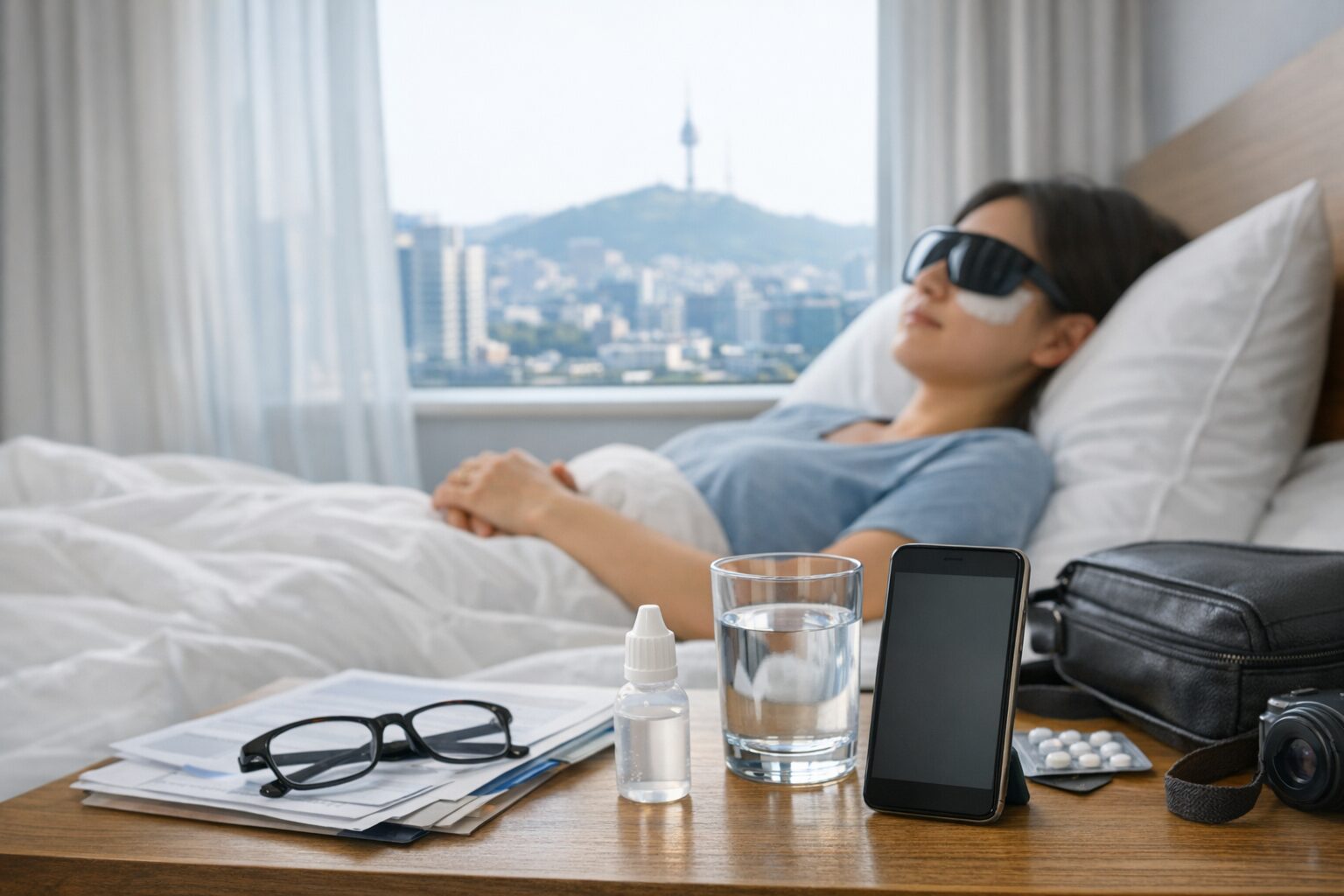
Make a written list of every medication you take, including the dose and how often. This matters because certain systemic medications and eye conditions can influence healing, dryness, and candidacy. A clear list prevents back-and-forth during your consultation.
Include prescription drugs, regular over-the-counter products, supplements, and any hormonal medication. List eye drops separately, especially artificial tears, allergy drops, or anything prescribed for dryness or pressure. If you have used steroid eye drops in the past, note that too.
Allergies belong on the same page. Write down drug allergies and any reactions you have had. If you do not know the English name of a medication, bring the original box so the active ingredient can be identified, or photograph the label clearly.
Prior eye photos, reports, and imaging
Gather any prior eye records you have, such as previous clinic reports, corneal scans, retinal photos, or documentation of past eye treatment. These materials are helpful because they show your baseline and any earlier findings, which our team can compare against the in-person measurements taken in Seoul.
If you have ever been told you have thin corneas, high pressure, dry eye, or any retinal concern, bring whatever paperwork supports that. Even a phone photo of a previous report screen can be useful. If you have had any prior eye surgery or injury, include those details as well.
You can read more about how we approach modern corneal procedures on our SMILE Pro information page, which explains the technology our surgeons use, including the ATOS femtosecond laser with CenTrax centration.
Pre-consultation packing checklist table
| Item | Why it helps | Format to bring |
|---|---|---|
| Glasses prescription history | Shows refraction stability over time | Printouts or phone photos |
| Current glasses and lens boxes | Confirms exact power and lens type | Physical items |
| Medication list | Affects healing and candidacy review | Written list plus original boxes |
| Eye drops | Indicates dryness or pressure history | Actual bottles or photos |
| Prior eye reports or scans | Provides baseline comparison | Printouts, files, or photos |
| Passport | Identity and travel records | Original document |
What about stopping contact lenses before the exam?
Stop wearing contact lenses before your examination, because lenses can temporarily alter the corneal shape and affect measurement accuracy. As a general guide, soft lens wearers often pause for several days and rigid lens wearers for longer, but follow the specific instructions our coordinators give you.
If you are unsure how long to stop, contact our team through the English and Mongolian patient coordination line before you fly. Bringing your glasses as your primary correction during the days before the exam makes this easier, which is one more reason to pack them rather than relying only on lenses.
Is vision correction surgery suitable for everyone?
Vision correction surgery is not suitable for everyone, and no procedure is risk-free. Suitability depends on factors such as corneal thickness, refraction stability, eye health, dryness, and your general medical background. The documents you bring help our specialists assess these factors during your in-person exam.
Some people are advised to wait, and some are better suited to one technique than another. Our four specialist ophthalmic surgeons review your measurements and history together with your goals before recommending anything. Honest answers about your medications, eye history, and daily lens use directly support a safe, individualized assessment. You can review common questions on our frequently asked questions page.
Planning your trip and consultation
Once your documents are packed, planning the rest of your trip is straightforward. Many international patients combine the consultation and procedure into a single visit, and our coordinators can help you arrange timing so your exam and any follow-up fit your schedule in Seoul.
For an overview of how visiting patients are supported, see our medical tourism guide, and for transparent pricing details visit our cost information page. When you are ready, you can reach our English and Mongolian coordinators by phone or WhatsApp at +82-10-5772-0210 to confirm your appointment and ask any pre-travel questions.
Frequently asked questions
Do I need to bring my old glasses if I have the prescription written down?
Yes, bring both if you can. A written prescription confirms the numbers, but your actual glasses let the team verify the current correction and check the lens type. Together they give a clearer picture than either alone.
What if I cannot find my older prescriptions?
Bring whatever you have, even one recent prescription. Ask your optician in Ulaanbaatar for any records they keep. Missing older documents will not stop your consultation, since a full examination is performed in person in Seoul.
Should I stop my regular medications before the consultation?
Do not stop prescribed medications on your own. Bring a complete list instead, and discuss everything during your in-person exam. Stopping important medication without medical advice can be harmful.
Can I get a diagnosis online before I travel?
No. We do not offer remote or online diagnosis. All examinations are performed in person in Seoul. Our coordinators can answer general questions before you arrive, but the assessment itself requires an in-person visit.