Presbyopia and Multifocal Lens Options Combined With Cataract Treatment in Korea
How modern intraocular lenses can address both blurry near vision and clouded lenses in one procedure…

At Smile Eye Clinic Korea in Gangnam, Seoul, international patients frequently ask whether they can correct reading vision and cataracts at the same time. In many cases the answer is yes, but the right lens choice depends heavily on your eyes, your daily habits, and your visual priorities. This article explains the lens types, how candidacy is assessed, and why a personalized exam matters more than any single product name.
Understanding Presbyopia and Cataracts Together
Presbyopia and cataracts both involve the eye’s natural lens, which is why surgeons often treat them as a connected problem. Presbyopia reduces flexibility, so close work becomes tiring or impossible without reading glasses. A cataract reduces clarity, so vision becomes hazy, glare increases at night, and colors may look faded.
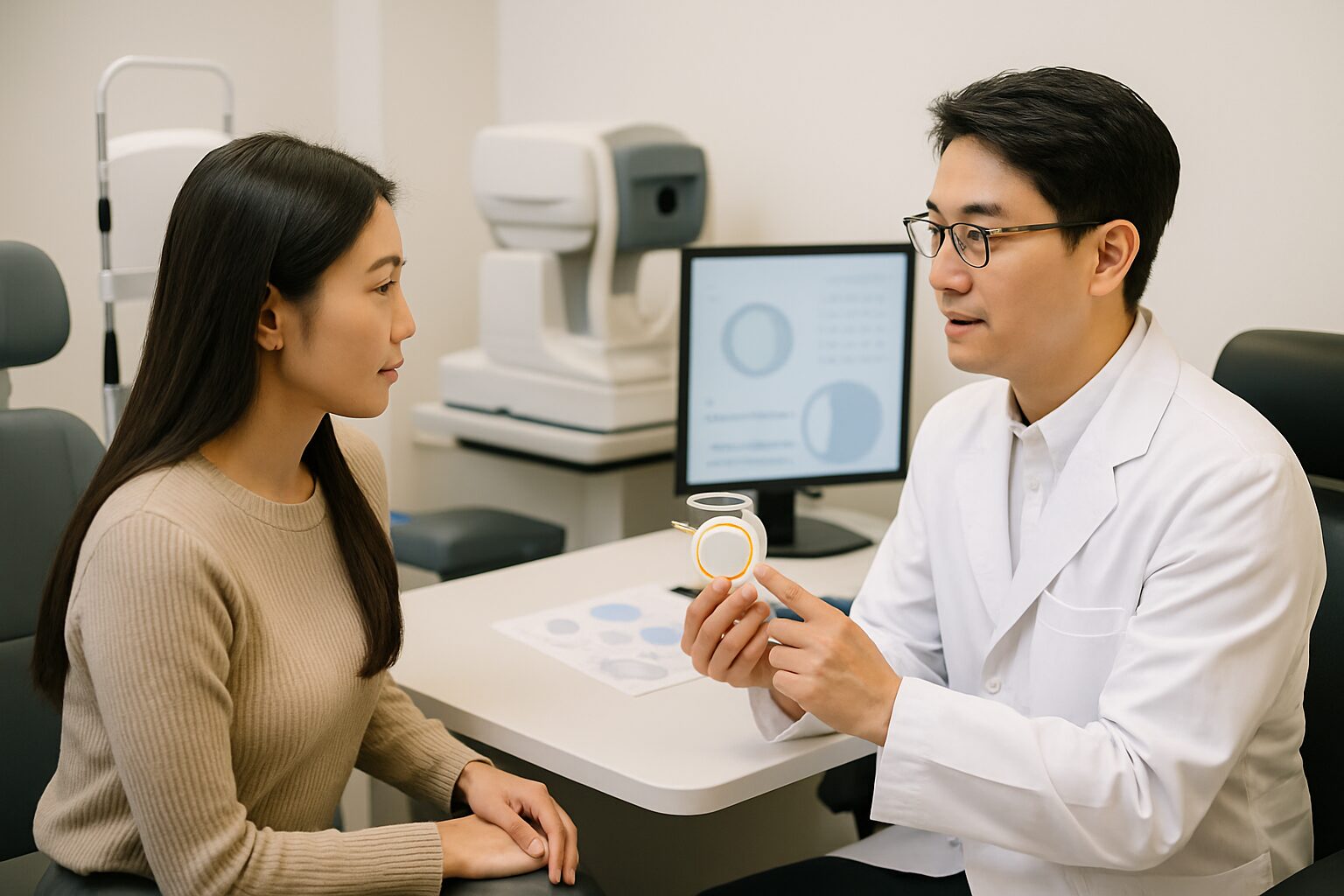
When a cataract is removed, the clouded natural lens is taken out and replaced with an artificial intraocular lens, or IOL. This is the key opportunity: because the natural lens is already being replaced, the surgeon can select a lens that also corrects presbyopia. Instead of restoring only clear distance vision, a premium lens can be chosen to restore a range of focus. For patients who do not yet have a cataract but want to escape reading glasses, a similar lens-based procedure called refractive lens exchange may be discussed, though candidacy rules differ.
Types of Lenses for Aging Eyes
There is no single best lens for everyone. Each design trades off certain strengths, and understanding these trade-offs helps you set realistic expectations.
Monofocal lenses provide excellent clarity at one fixed distance, usually far. They are reliable and widely used, but most patients still need reading glasses afterward. They remain a strong choice for people who prioritize crisp distance vision and do not mind glasses for close work.
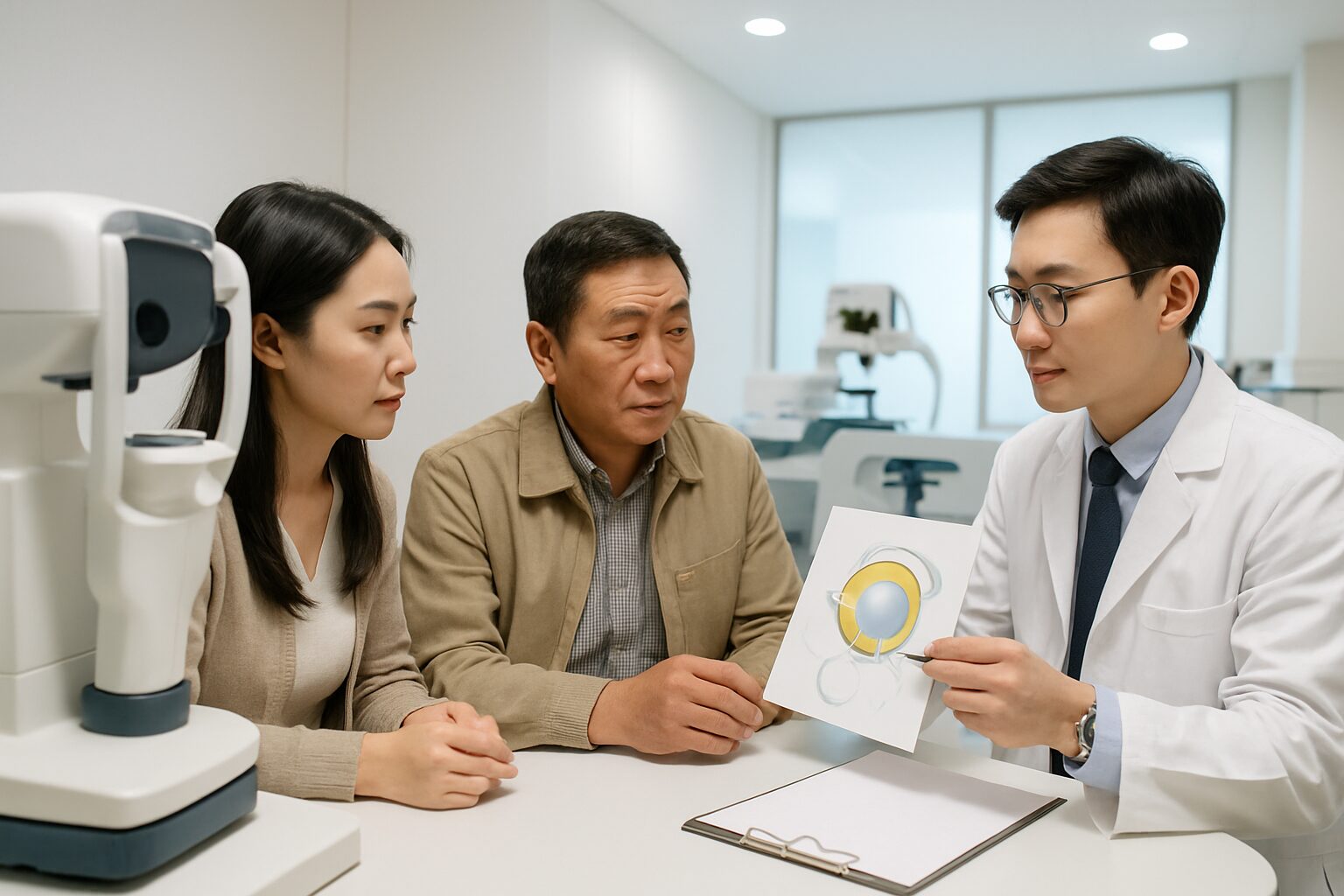
Multifocal lenses contain multiple focal zones so the eye can see far, intermediate, and near distances. Many patients become far less dependent on glasses. The trade-off is that some people notice halos or glare around lights at night, especially in the first months as the brain adapts.
Extended depth of focus (EDOF) lenses stretch a continuous range of vision, often giving strong distance and intermediate quality with slightly less powerful near vision. They tend to produce fewer night-time visual disturbances than full multifocals, making them popular with drivers and computer users.
Trifocal lenses are an advanced multifocal design that adds a dedicated intermediate zone, which suits people who work at arm’s length frequently. Toric versions of these lenses also correct astigmatism, allowing patients with irregular corneal curvature to still pursue glasses-reduced outcomes.
Comparing the Main Options
| Lens Type | Distance | Intermediate | Near | Night Glare Risk |
|---|---|---|---|---|
| Monofocal | Excellent | Limited | Glasses needed | Very low |
| EDOF | Excellent | Very good | Moderate | Low |
| Multifocal | Good | Good | Good | Moderate |
| Trifocal | Good | Excellent | Very good | Moderate |
This table is a simplified guide, not a prescription. Two patients can receive the same lens and have different experiences depending on their cornea, retina, pupil size, and lifestyle demands. That is why the consultation and measurements are the deciding factor, not the brochure.
Are You a Good Candidate?
Premium lenses work best in healthy eyes. Before recommending a multifocal or EDOF lens, our surgeons evaluate several factors and discuss whether the benefits justify the trade-offs for your situation.
- Healthy retina and optic nerve: Conditions such as macular degeneration or significant glaucoma may reduce the benefit of multifocal lenses.
- Corneal health: Severe dry eye or irregular astigmatism can blur the multiple focal points and lower satisfaction.
- Realistic expectations: Reduced dependence on glasses is the goal, not a guarantee of perfect, glasses-free vision in every situation.
- Lifestyle fit: Frequent night driving may make EDOF lenses more comfortable than full multifocals.
- Tolerance for adaptation: The brain needs weeks to months to neuroadapt to multiple focal zones.
It is important to be honest about risk. All surgery carries some risk, and no lens eliminates the chance of needing glasses for certain tasks. Some patients require a minor laser touch-up later, and in rare cases a lens may need exchanging if visual disturbances do not settle. A thorough exam helps reduce these risks but cannot remove them entirely.
What to Expect at Your Consultation
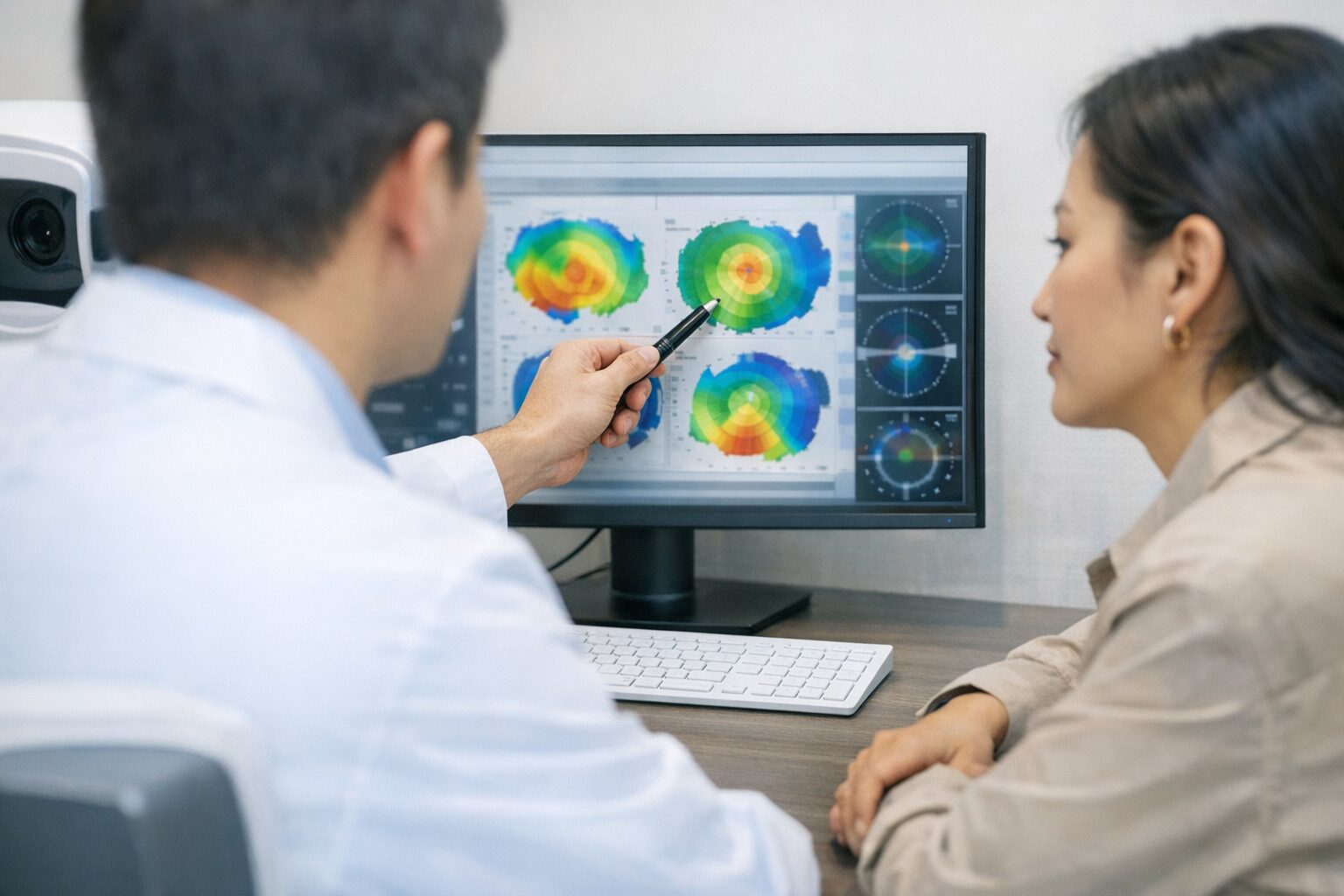
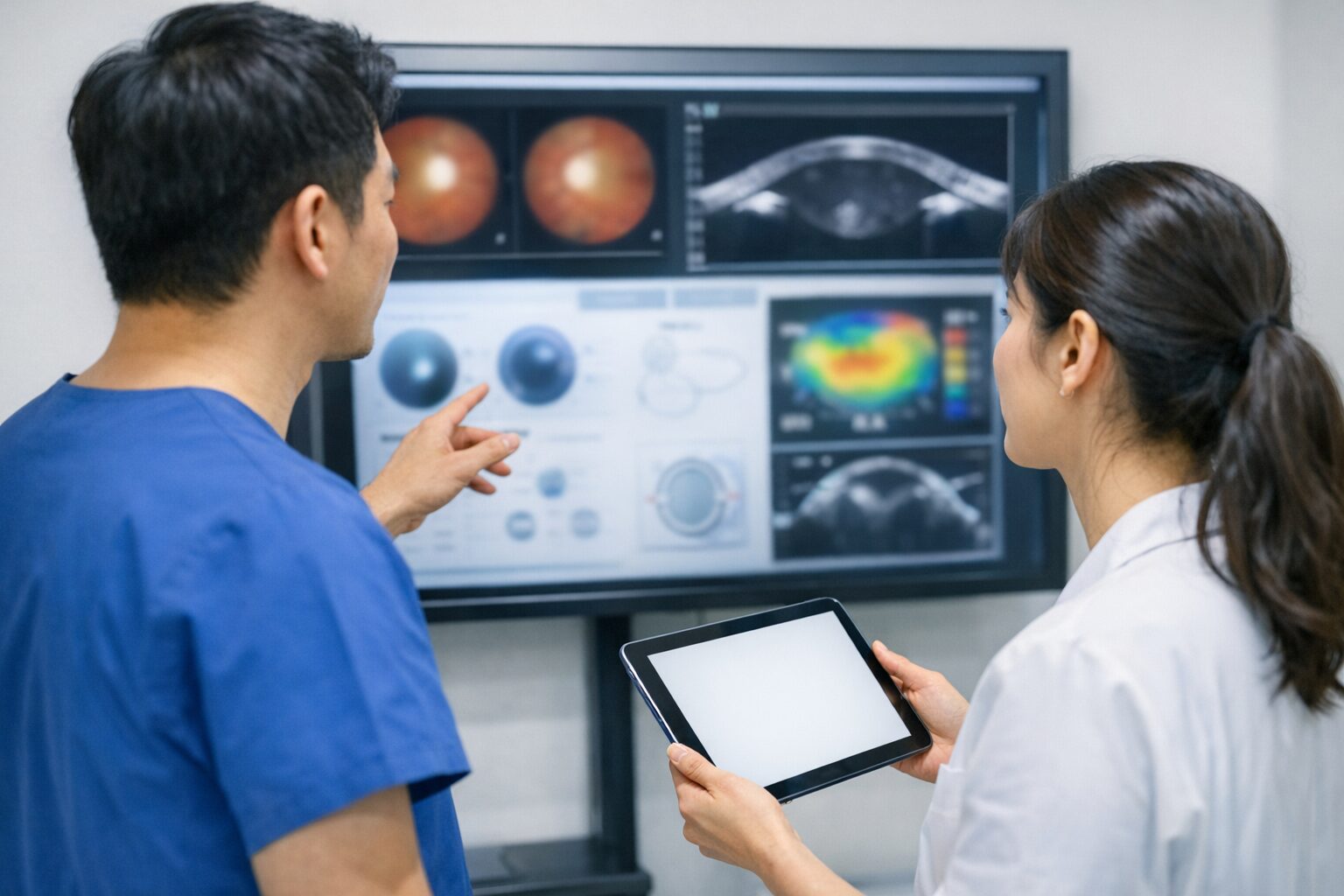
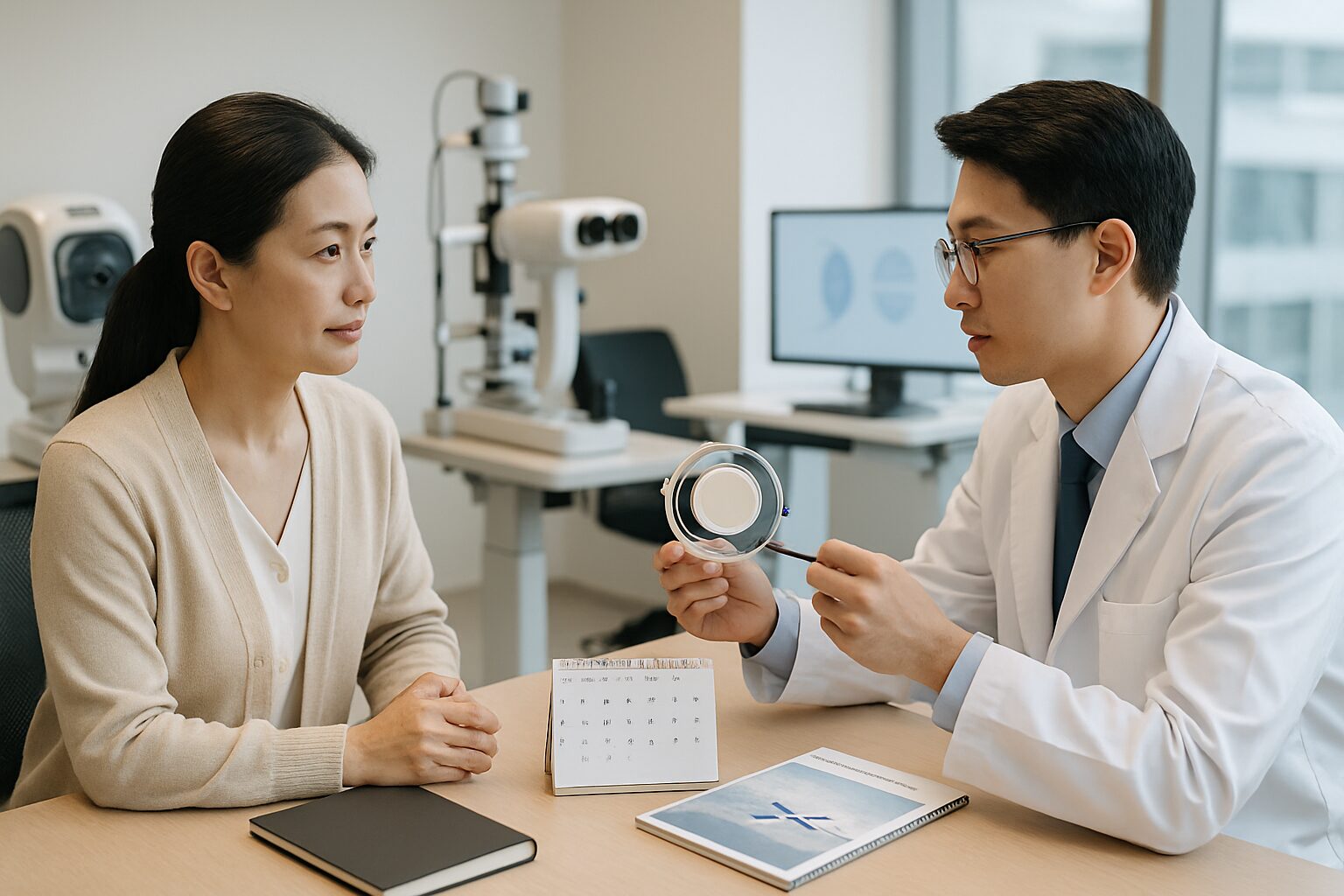
A complete evaluation usually includes corneal mapping, measurement of eye length, retinal imaging, and a detailed discussion of your daily activities. The surgeon then matches lens candidates to your anatomy and goals. Because every eye is unique, this personalized planning is where outcomes are truly decided.
Planning Your Visit From Abroad
International patients often combine their consultation, surgery, and follow-up into a focused trip to Seoul. Our coordinators help schedule pre-arrival document review, arrange interpreter support, and plan the timing so that key post-operative checks happen before you fly home. Cataract and lens surgery typically allows a relatively quick return to daily activities, but your surgeon will confirm a safe travel window for your specific case.
If you would like to know which lens options may suit your eyes, our team can review your situation and outline a personalized plan. Contact Smile Eye Clinic Korea by phone or WhatsApp at +82-10-5772-0210, or visit https://smile-i.com/ to begin. Clearer vision at every distance may be closer than you think, but the first step is a proper exam tailored to you.